
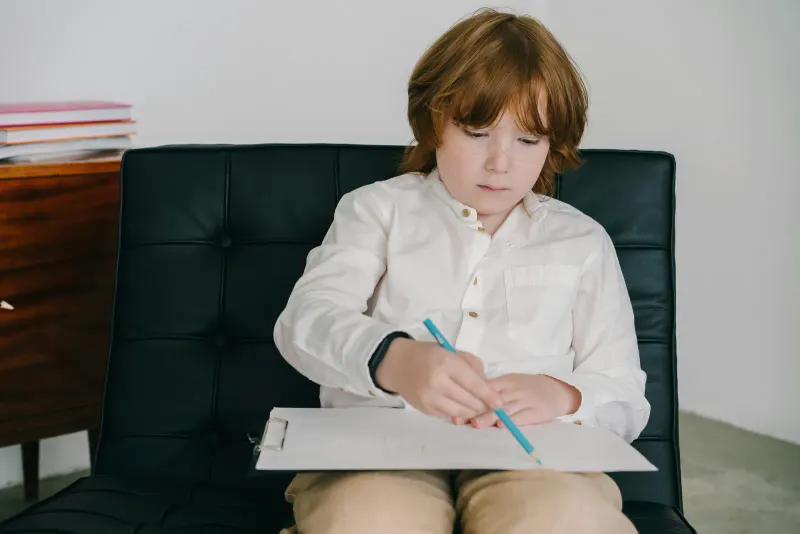
Eye exams for nonverbal patients can still provide meaningful information about vision and eye health. Doctors adapt testing by using observation, matching, lights, imaging, objective focusing measurements, and caregiver input instead of relying only on spoken answers.
This matters for young children, autistic patients, people with developmental disabilities, people with brain injury, and adults who cannot communicate easily. A patient does not need to read letters aloud for the exam to be useful. For a related symptom pattern, read Cortical Visual Impairment: Signs That Point Beyond the Eye.
At a Glance
- Nonverbal eye exams can assess eye alignment, focusing needs, pupil responses, eye health, and visual behavior.
- Testing may use pictures, matching cards, preferential looking, photoscreening, autorefraction, or retinoscopy.
- Caregiver observations help identify changes in behavior, comfort, mobility, and near work.
- Eye pain, light sensitivity, trauma, sudden behavior change, or suspected vision loss needs prompt care.
How Doctors Adapt Eye Exams For Nonverbal Patients
Doctors start by watching how the patient uses vision. Fixation, following a target, reaching for objects, eye contact, head posture, and navigation in the room can all provide clues.
AAPOS explains that photoscreening can help detect focusing problems in children who cannot cooperate with a standard eye chart. Similar instrument-based tools can support, but not replace, a full eye exam when concerns persist.
Some patients can match shapes or pictures without speaking. Others do better with short testing blocks, breaks, dimmer lights, or a familiar caregiver nearby.
Tests That Do Not Require Spoken Answers
The exam is usually built from several small pieces. Each piece adds confidence, especially when one test is hard for the patient that day.
- Preferential looking uses patterns or cards to see what a patient visually notices.
- Fix and follow testing checks whether each eye can hold and track a target.
- Retinoscopy estimates glasses power by observing reflected light from the eye.
- Autorefraction uses an instrument to estimate focusing error.
- Eye alignment testing looks for strabismus, which is an eye turn or teaming problem.
- Dilated exam checks the retina, optic nerve, lens, and other internal eye structures.
Sometimes eye drops are used to relax focusing so the prescription estimate is more accurate. The clinician can explain why drops are being used and what temporary blur or light sensitivity to expect.
What Caregivers Can Share
Caregivers often know the patient's visual habits best. Their observations can point the exam toward reading difficulty, distance blur, light sensitivity, eye pain, or a new neurologic concern.
Useful details include whether the patient holds objects close, bumps into things, closes one eye, avoids stairs, tilts the head, rubs the eyes, loses interest in screens or books, or seems startled by objects from one side.
For adults with communication changes, it helps to describe the baseline. A new change after stroke, concussion, seizure, infection, or medication change should be discussed clearly.
When Symptoms Need Faster Attention
Seek prompt care if a nonverbal patient has eye redness with pain, light sensitivity, swelling, injury, chemical exposure, new eye crossing, a white pupil reflex in photos, or behavior suggesting sudden vision loss.
Urgent care is also important if there are neurologic symptoms such as new weakness, severe headache, confusion, facial droop, or sudden balance problems. Vision changes in a nonverbal patient may show up as distress, withdrawal, or sudden refusal of familiar tasks.
Preparing For A More Successful Visit
- Bring glasses, medication lists, prior eye records, and school or therapy observations if available.
- Schedule at a time of day when the patient is usually most comfortable.
- Bring preferred communication tools, comfort items, snacks if allowed, and sensory supports.
- Tell the staff what helps the patient cooperate and what tends to cause distress.
- Ask which parts of the exam were completed and which should be repeated later.
Adapted testing is still real eye care. The result may be a clear diagnosis, a reasonable estimate, or a plan to repeat testing in stages, but the process can protect vision while respecting the patient's communication needs.
Common Questions About Nonverbal Vision Exams
Can an accurate glasses prescription be estimated without verbal answers?
Often, yes. Retinoscopy and autorefraction can estimate focusing error without the patient choosing between lens options. Eye drops may be used in children or patients who accommodate strongly, because relaxing focus can make the measurement more reliable.
What if the patient cannot tolerate the whole exam?
The visit can be divided into priorities. The clinician may first check urgent concerns, eye alignment, pupils, and the retina, then plan a second visit for additional measurements. Short, successful steps are often more useful than forcing a long exam that becomes distressing.
How can caregivers describe visual behavior?
Give concrete examples. Mention whether the patient reaches accurately, recognizes faces, avoids stairs, bumps into objects, holds items close, reacts to light, or favors one side. Changes from baseline are especially important because they may signal new vision loss or discomfort.
Are screening devices enough?
Screening devices can identify risk factors, but they do not answer every eye health question. A patient may still need a full exam if the screening is abnormal, symptoms persist, or caregivers notice pain, light sensitivity, eye crossing, or changes in behavior.
Making The Exam Respectful And Useful
A good adapted eye exam respects communication style, sensory needs, mobility, and fatigue. The clinician may explain each step to the caregiver and patient, use fewer transitions, dim lights when possible, and allow breaks between tests.
Success should not be measured only by whether every standard test was completed. A visit that identifies a glasses need, eye alignment issue, cataract, retinal problem, or urgent cause of discomfort can be very successful. Follow-up can fill in measurements that were not possible the first time.
- Share what communication method the patient uses at home or school.
- Tell the team about sensory triggers before testing starts.
- Ask for a written summary of what was completed and what remains uncertain.
How Non-Verbal Vision Testing Is Adapted
Non-verbal vision testing is useful when a patient cannot reliably read a chart, name pictures, or explain what looks blurry. The exam still has structure. The clinician watches fixation, tracking, head posture, eye alignment, pupil responses, and how the patient uses vision in the room. Caregiver observations matter because vision problems may show up as reaching errors, avoidance of near work, light sensitivity, or changes in mobility.
- Preferential-looking cards or matching tasks can estimate visual acuity without spoken answers.
- Retinoscopy can estimate a glasses prescription when subjective choices are not reliable.
- Eye alignment and movement testing helps separate visual attention problems from strabismus or tracking difficulty.
- Dilation lets the doctor check the retina, optic nerve, and media clarity when behavior alone is not enough.
What Caregivers Should Track Before The Visit
Bring practical examples instead of trying to translate everything into medical terms. Note whether the person bumps into objects on one side, holds items very close, avoids stairs, misses food on a plate, covers one eye, squints, or performs differently in cluttered spaces. Short phone videos can help the care team understand patterns that may not appear during a brief clinic visit.